Clarksville TN history pretty much starts and ends with the river, and since I live near here and my boat's whole world is going to be the Cumberland right below downtown, I wanted the town's story told from the water up. Most of this leans on the Tennessee Encyclopedia entry on Clarksville by Thomas H. Winn, which is a good read, and I'd go read the whole thing when you're done here.
A town on a bluff
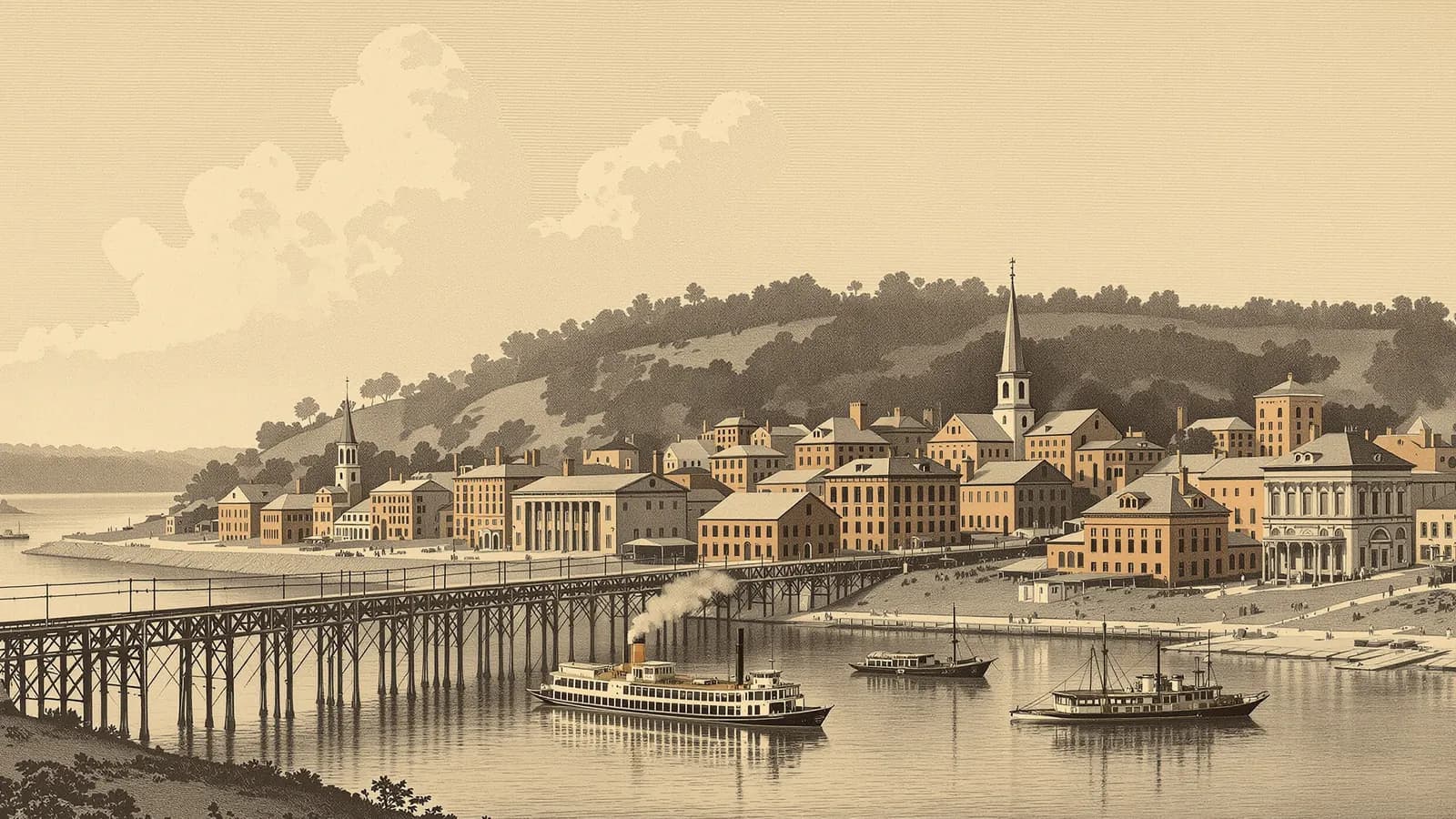
The encyclopedia says North Carolina's legislature established Clarksville in 1784 as the seat of what was then Tennessee County, and named it for George Rogers Clark, the Revolutionary War hero. Some sources say 1785, and our film went with "laid out in 1784." The land was part of a reservation North Carolina set aside to pay its Revolutionary War soldiers, and the reason it ended up right here is mostly the two rivers, since the Red River meets the Cumberland right at town, plus the soil up on the Highland Rim was great for tobacco.
Tobacco made the town
In 1788 Clarksville became an official tobacco inspection point according to the encyclopedia, which made it the trade center for all the farms around it. The steamboat first showed up at Clarksville in 1820, and the encyclopedia calls the rivers "two-lane river highways" after that, with faster and cheaper shipping and a lot more tonnage moving.
1858 was the big year, when more than 18,000 hogsheads of dark-fired tobacco shipped out and brought back more than $2.3 million, and Clarksville's "type 22" tobacco became the most famous strain in England, France, Germany and Italy. That's a whole lot of barrels rolling down to the landing, and I tried to picture it in Film 04.
The railroad and the war
In 1859 and 1860 the Memphis, Clarksville and Louisville Railroad came through with a bridge over the Cumberland, which was good for business and also made the town a target. The encyclopedia notes that folks in Clarksville first opposed secession and then voted for it in June 1861 after Fort Sumter.
Confederates built two earthen forts, Fort Defiance and Fort Clark, where the Red meets the Cumberland, and neither one was finished or fully armed when Flag Officer Andrew Foote's Union flotilla came upriver in February 1862 right after Fort Donelson fell. The Confederates pulled out and set fire to the railroad bridge on the way, and the citizens put the fire out. The city runs the Fort Defiance site today as a park and interpretive center up on the bluff over where the rivers meet.
After the war
This part isn't pretty and the encyclopedia doesn't pretend it is. Union occupation ended in September 1865 and the years after brought Reconstruction fights and rioting and Klan activity, while freed African Americans built their own institutions like St. Peter's AME Church and pushed for schools. In 1878 a big arson fire wiped out fifteen acres of the business district. In 1904 Dr. Robert Burt opened a clinic that served both Black and white patients, and it grew into the city's only public hospital until the late 1940s.
There were a few things in there I didn't know at all. Between 1902 and 1912 dark-fired tobacco growers fought the American Tobacco Company's grip on prices in what got called the Black Patch War, and Clarksville was right in the middle of it. In 1919 Brenda Runyon and others started the Women's Bank of Tennessee here, which the encyclopedia calls the first bank in the nation run entirely by women. And Caroline Gordon and Allen Tate had a home on the Cumberland that drew a lot of big-name writers, plus Robert Penn Warren graduated high school here in 1921, which is pretty cool for a tobacco town.
Camp Campbell
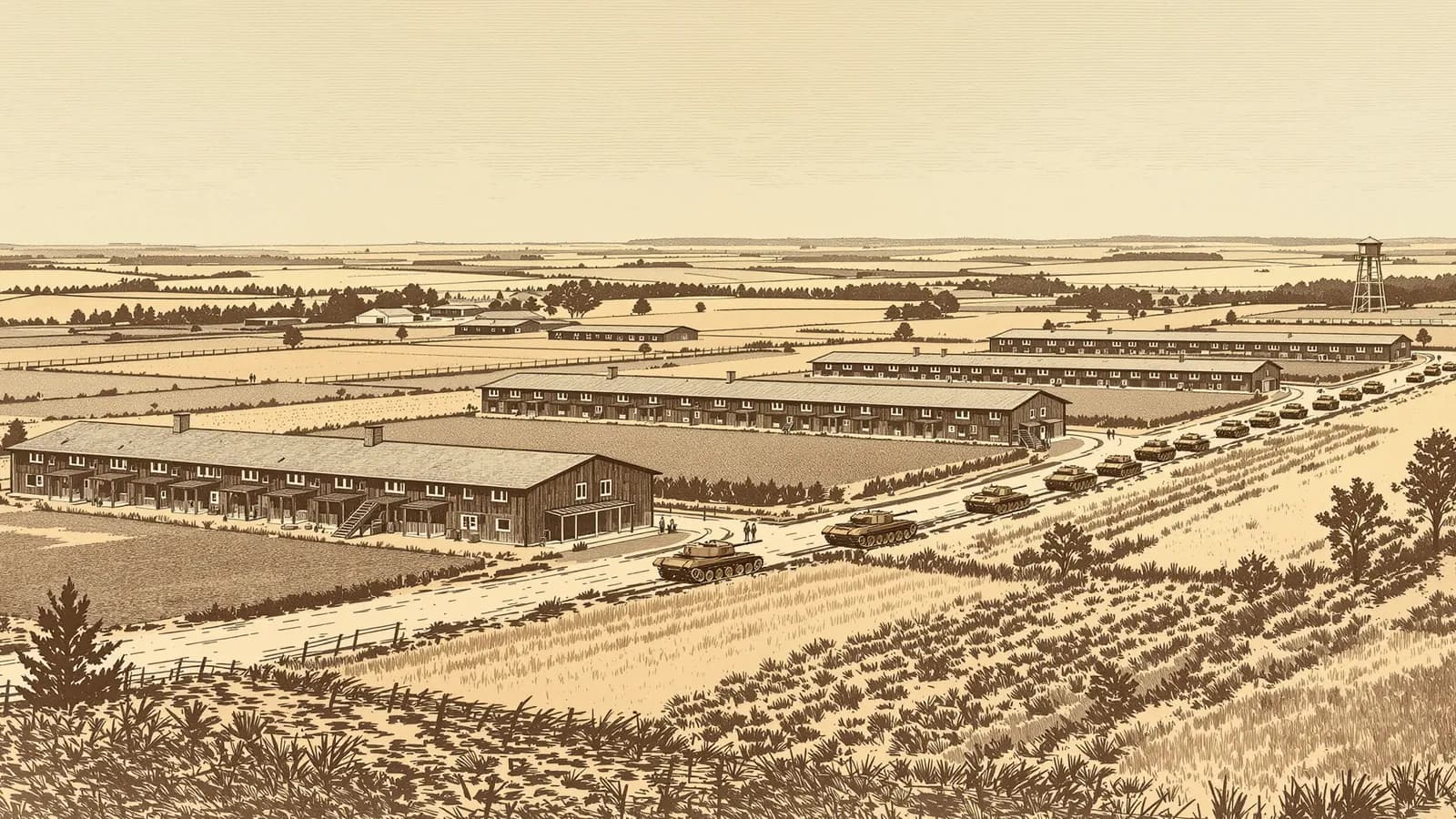
In 1941 the War Department set up Camp Campbell just north of town, and it became permanent as Fort Campbell in 1950. The encyclopedia calls the post "the single most important force in the local economy and culture," and living here that definitely tracks. I wrote more about it in Fort Campbell History and 101st Airborne History.
In 1960 Clarksville's own Wilma Rudolph won multiple gold medals at the Rome Olympics, and the encyclopedia notes she got a hometown welcome but still couldn't eat at a local chain restaurant. The Wilma Rudolph Event Center sits in Liberty Park now, right by the boat ramp.
The river now
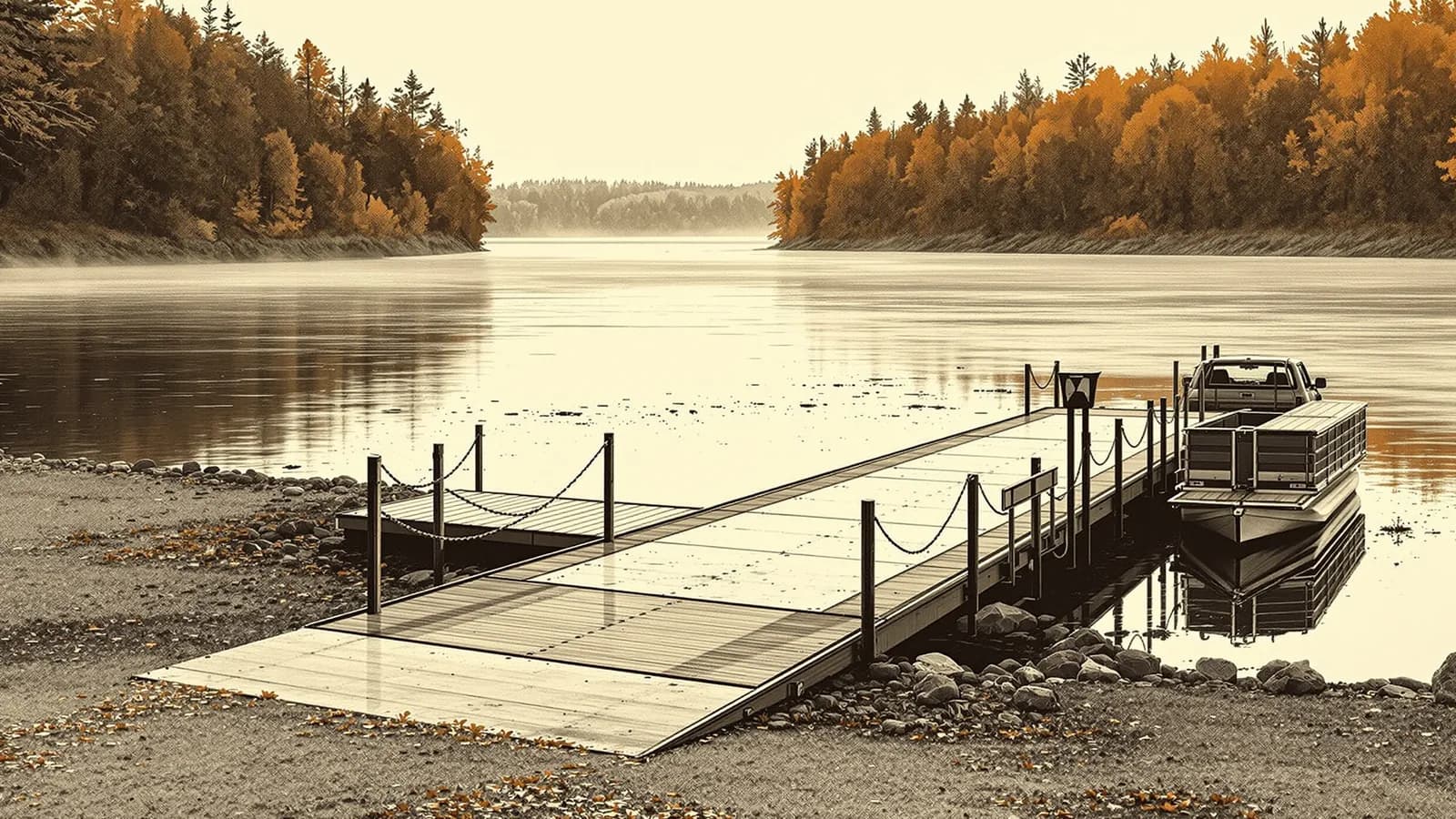
I-24 opened in 1975 and 1976, and the encyclopedia says that replaced the old reliance on the river and the railroad. The barges still run, but for most of us the river is about parks and ramps and a Saturday on the water now. McGregor Park and the RiverWalk downtown sit right where the old landing trade happened, and the city's "As the River Flows" exhibit there tells part of this story. If you want to see the town from the water, Clarksville TN boat ramps has where to put in.
I just like knowing where I live. My boat was built way out in Colville, Washington, and her home water is a town with 240-some years of river history behind it, so it felt right to learn some of it. Her story is on the build page and the shop photos and films are in the gallery.