Fort Campbell history is something you kinda soak up just living in Clarksville, since the post sits right on the state line next to town, which is why you'll hear both Fort Campbell, Kentucky and Clarksville, Tennessee and both are sorta true. I mostly stuck to the Army's own Fort Campbell history page for this, plus the Tennessee Encyclopedia for how the post shaped Clarksville. I'm just a neighbor who likes to read, so if you want the deep version go to the sources.
Who it's named for
The post is named for Brig. Gen. William Bowen Campbell, the last Whig governor of Tennessee. The Army notes he was colonel of the First Tennessee Volunteers, the "Bloody First," and led them at Monterrey in 1846 yelling "Boys, follow me!" which is a pretty good line to have on your record.
Building Camp Campbell
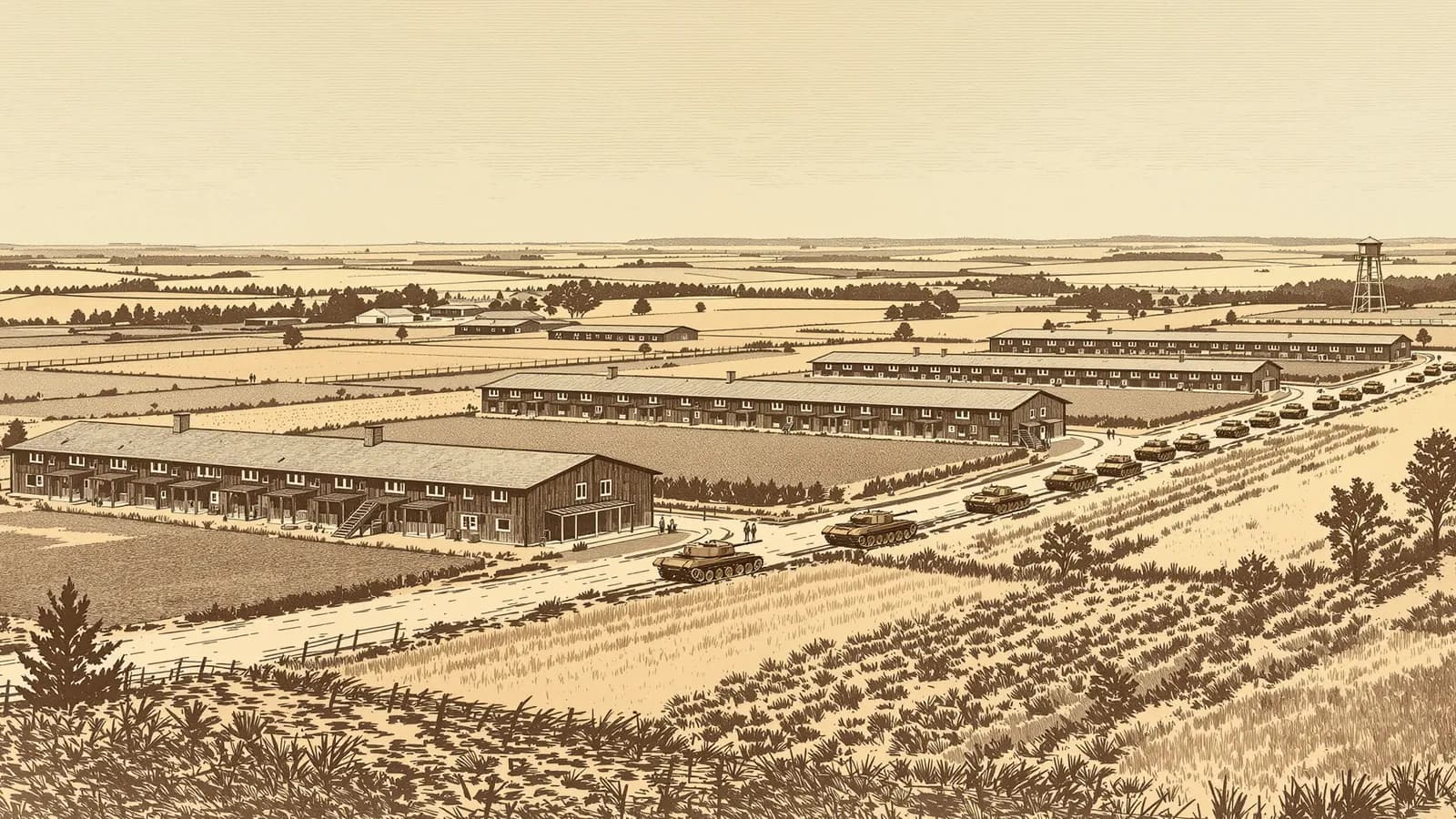
The site was picked on July 16, 1941, between Hopkinsville, Kentucky and Clarksville, Tennessee, and construction started February 4, 1942. Within about a year Camp Campbell was built to house one armored division and its support troops, around 23,000 men, and the first cadre showed up from Fort Knox that summer, which was one officer and 19 enlisted men. The Tennessee Encyclopedia says the War Department set the camp up on 42,841 acres, which is a lot smaller than the post is now.
During World War II Camp Campbell trained the 12th, 14th and 20th Armored Divisions, Headquarters IV Armored Corps and the 26th Infantry Division, so there were a whole lot of tanks rolling through farm country.
After the war part of the post became a storage site for nuclear weapons. The Army says it was called "Clarksville Base," it was top secret, and at one point it held a third of America's nuclear arsenal. I had no idea about that one, and it's kinda wild to think about right up the road.
Becoming Fort Campbell
The 11th Airborne Division showed up in spring 1949 after occupation duty in Japan and stayed until early 1956. In April 1950 the post became permanent and got renamed Fort Campbell, and the encyclopedia says that's when Clarksville folks "knew that their future was fixed as part of the national scene."
On September 21, 1956 the colors of the 101st Airborne Division were presented at Fort Campbell, bringing back the famous World War II division, and the full division story is in 101st Airborne History.
A Basic Combat Training Center opened here in 1966 with the first full class of 1,100 trainees starting July 11 that year, and the 6th Infantry Division was reactivated here in 1966 and inactivated again in 1968. In 1971 the 173rd Airborne Brigade came home to Fort Campbell and became the 3rd Brigade of the 101st, and the 101st was welcomed back from Vietnam on April 6, 1972.
The post now
The Army's page says Fort Campbell is a 106,700-acre installation on the Tennessee and Kentucky line, though I've seen other official-looking numbers like 105,068 acres, so I'd treat it as somewhere around 105,000 to 107,000. It's home to the 101st Airborne Division (Air Assault), which is the only air assault division in the world, along with the 5th Special Forces Group (Airborne), the 160th Special Operations Aviation Regiment (Airborne), the 531st Hospital Center, the 52nd Ordnance Group (EOD) and more.
The Army also points out the post can deploy forces by air, rail, highway and inland waterway, and that inland waterway is the Cumberland, which made me smile a little.
What the post means to Clarksville
The Tennessee Encyclopedia says Fort Campbell "remains the single most important force in the local economy and culture," and that Camp Campbell brought wartime prosperity and people from all over the country into what had been a tobacco town. You feel it pretty much everywhere around here, in the restaurants and the traffic and the folks at the hardware store. My Clarksville TN history post has more on the town before and after.
Most of this blog is about the Cumberland and my boat, a Raider Coastal 230 named Doreen that was built in Colville, Washington, but I think Fort Campbell is the other big story of this place, since the river made Clarksville and the post kinda remade it. A lot of Fort Campbell families end up on the water too, and if that's you I wrote up Fort Campbell things to do on the water. Our two-minute Film 04 touches both stories.
If you want to learn more without a history degree, the Army's unit history is long but it's the official record and it's free, and the encyclopedia entry explains what the post did to Clarksville's economy and culture. The Fort Defiance site in Clarksville is a different war but the same idea, since the river and the military have been tied together here since 1862. If you have base access, ask about museums and history programs on post. I didn't list any specifics because I couldn't confirm current hours and access rules from an official page.
FAQ
When was Fort Campbell built?
The site was selected July 16, 1941, and construction began February 4, 1942. It was called Camp Campbell until April 1950, when it became permanent as Fort Campbell.
Who is Fort Campbell named after?
Brig. Gen. William Bowen Campbell, the last Whig governor of Tennessee, who led the First Tennessee Volunteers in 1846.
Is Fort Campbell in Tennessee or Kentucky?
Both. It sits on the state line between Clarksville, Tennessee, and Hopkinsville, Kentucky.
How big is Fort Campbell?
The Army's history page says 106,700 acres. Other sources give slightly different numbers.