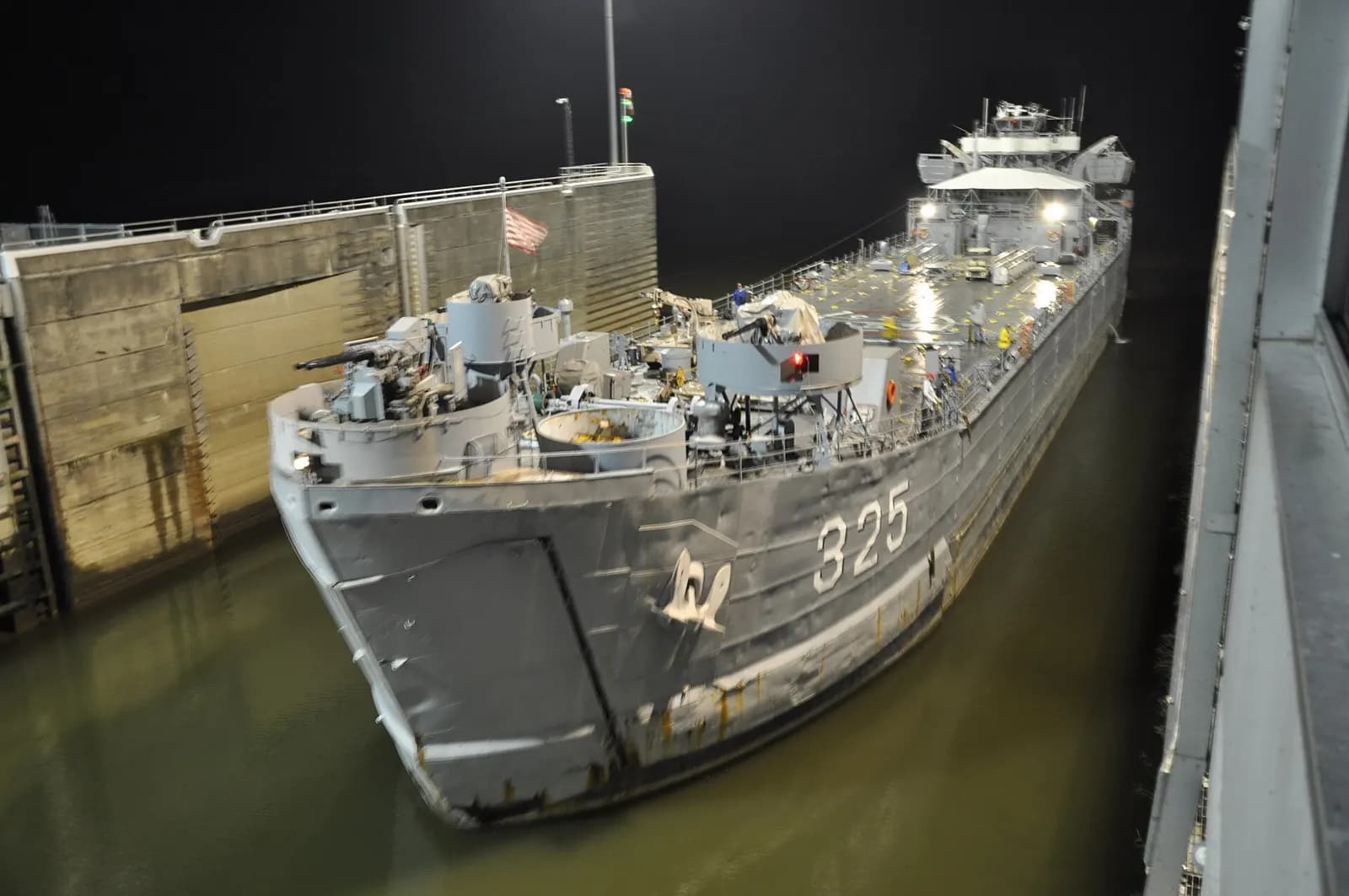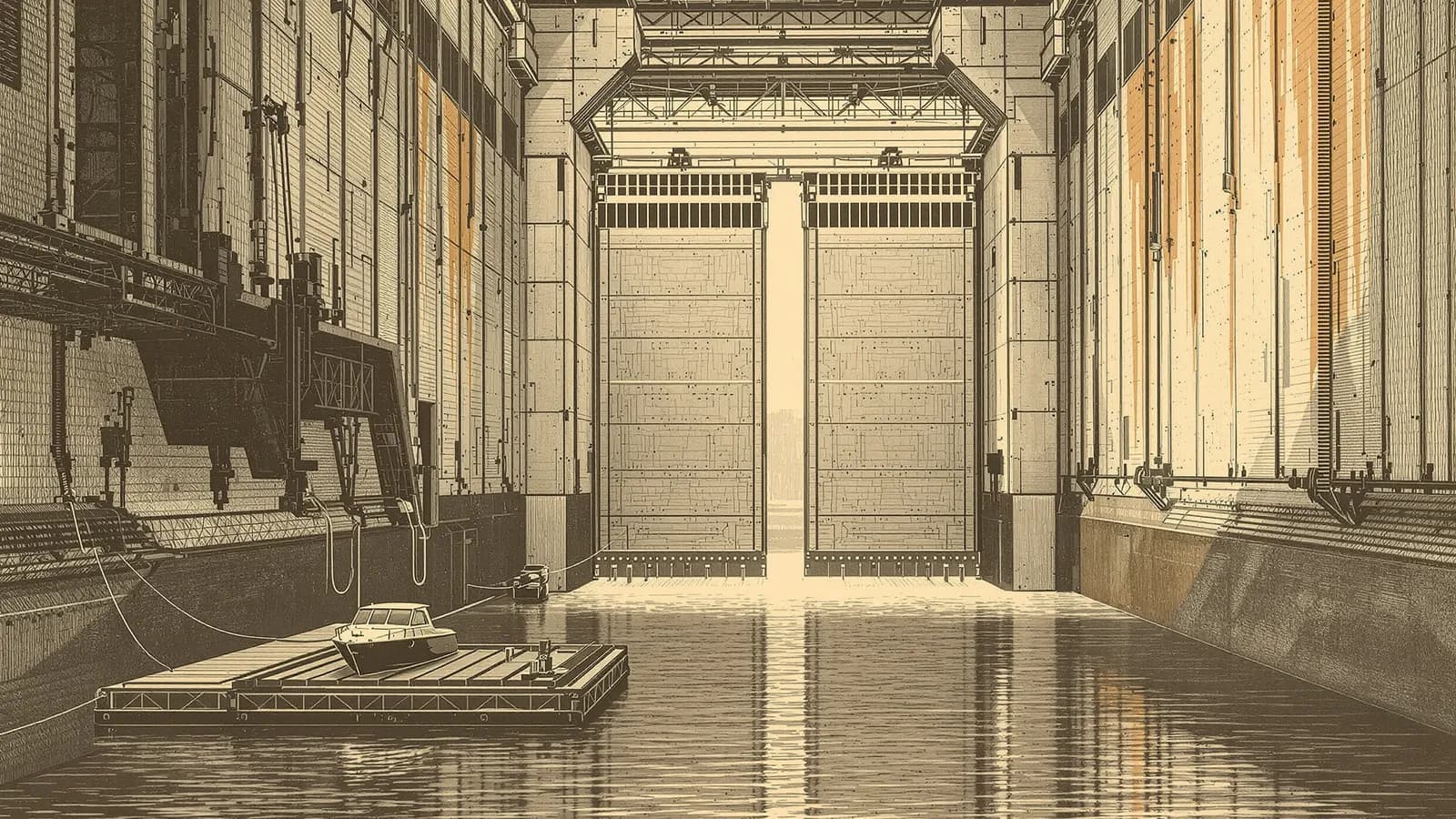
The Cumberland River locks are kinda intimidating when you think about it, a concrete box 800 feet long with gates as tall as a building and maybe a towboat idling behind you while the water drops out from under your boat. So I read everything the Army Corps of Engineers and the TVA publish on locking through, and these are my notes cleaned up, with all of it coming from the official guidance linked below.
The locks around here
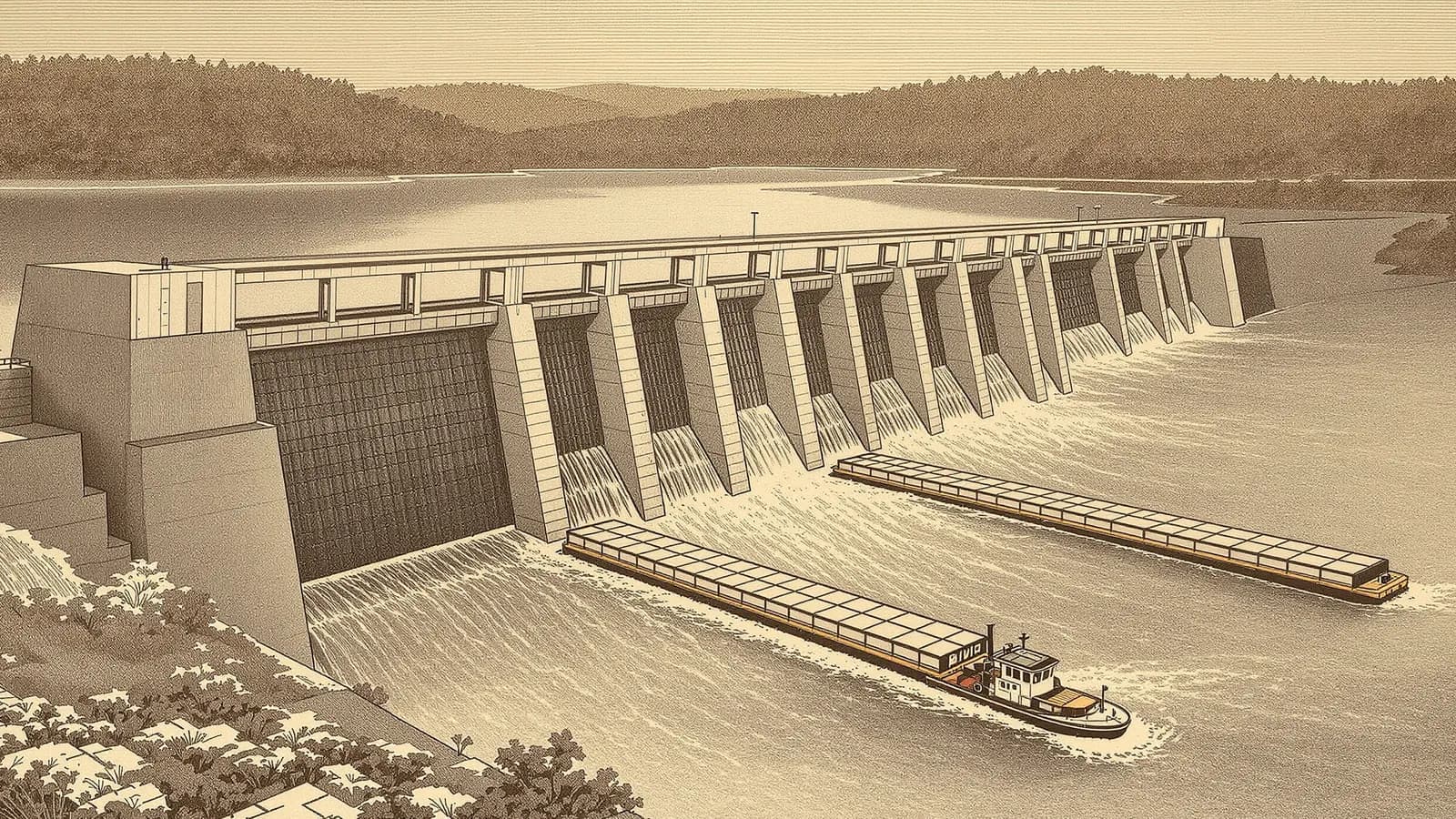
The Corps counts four locks on the Cumberland that boats lock through. Closest to Clarksville and Nashville you've got Barkley Lock at river mile 30.6 near Grand Rivers, Kentucky, which is 800 by 110 feet with about a 57-foot lift at normal lake levels, and Cheatham Lock at river mile 148.6 about 10 miles northwest of Ashland City, also 800 by 110 feet but with a 26-foot normal lift, and I wrote more on that one in my Cheatham Lock post. Then there's Old Hickory Lock at river mile 216.2 near Old Hickory and Hendersonville, which is 84 by 400 feet with about a 60-foot lift. The fourth one, Cordell Hull, is way upstream near Carthage.
Before you get there
For gear you want a Coast Guard approved life jacket for every person, since the Corps wants them worn in the lock, plus two good lines for the bow and stern (TVA says at least 50 feet of line), fenders on the wall side because lock walls are rough, a boat hook, and a VHF radio. A phone works for some locks, but the radio is how the lock and the towboats talk to each other.
Locks also close for maintenance, and Barkley had a closure that ended September 30, 2026 per the Nashville District, so check the Corps lock notices or call the lock before you plan a whole trip around it.
Locking through, step by step
The Corps' Stop! Look! Lock! guidance says to come in slow and stay clear of anything already locking, so you don't block the approach for a tow and you just hang back in the waiting area.
Then you ask for a lockage, and the TVA's Locking Through page gives three ways to do it. You can pull the signal cord at the small-craft signal stations near the ends of the approach walls, you can call on the radio, where TVA's guide says to hail the lock on VHF channel 16 (though some Corps districts use channel 14 for lock talk, so listen and do what the lockmaster tells you), or you can phone, and the lock numbers are on the Corps pages.
The lights and horns work like this, per TVA, and the Corps uses the same basic system:
| Signal | Meaning |
|---|---|
| Green light, or one long horn blast | Enter the lock |
| Amber light | Approach, but don't enter yet |
| Red light | Stay out. Lock isn't ready for you |
| One short horn blast | Leave the lock |
When in doubt I'd just wait for the lockmaster to say so. Go in one boat at a time at no-wake speed and head where the lockmaster points, since the whole approach and chamber are no wake.
The big one is tying up. Inside the chamber there are floating mooring bits that ride up and down with the water, and you loop your line around the bit and hold it or take a turn on a cleat so you can adjust. Never tie to a ladder or anything fixed, because if the water drops and you're tied to something that doesn't move your boat ends up hanging off it, and TVA calls this out in plain words.
Once you're secure TVA asks you to shut the engine down, and everybody stays seated with life jackets on and keeps their hands and feet off the wall. Don't let go of the line until the gate is all the way open and you hear one short horn blast, and then leave slow, still no wake.
Commercial traffic goes first
Under 33 CFR 207.300 government and commercial vessels get priority. Recreational boats can lock through with a commercial tow if both sides agree, and if that doesn't happen the rule says pleasure craft get a separate lockage after three other lockages have gone by. So I'd bring some patience and a snack and some music, and I'm thinking Johnny Cash, which seems right for the Cumberland.
The Corps logs a lot of recreational traffic too. A 2018 DVIDS story said Cheatham alone handles around a thousand recreational lockages a year, so you won't be the first one figuring it out.
The stuff I plan on being careful about is staying away from the spillways on the dam side, which the Corps warns about every year, and watching for prop wash from tows since a towboat leaving the chamber kicks up real current. The Corps guidance also says no drinking while operating, which is an easy rule, and I want the kids seated with vests on and away from the gunwale on the wall side.
Doreen is a Raider Coastal 230, and the build page explains how I ended up there. On the Cumberland the locks are the gates between the lakes, so a run from Clarksville up to Nashville means going through Cheatham, while getting to Kentucky Lake means going down Lake Barkley and through the canal, which has no lock at all. There's more on that in Lake Barkley vs Kentucky Lake, and the dams that made these locks are part of the river's story in Film 04, which covers when they went in and what the river was like before.
FAQ
How do I request a lock on the Cumberland River?
Pull the small-craft signal cord near the end of the lock's approach wall, call the lock on the VHF radio, or phone the lock. Then wait for a green light or one long horn blast before entering.
Do recreational boats have to wait for barges at locks?
Often, yes. Federal rules give government and commercial vessels priority. A pleasure boat can share a lockage with a tow if both agree, and otherwise gets its own lockage after three other lockages.
What do I tie to inside a lock chamber?
Use the floating mooring bits that rise and fall with the water. Never tie to a ladder or fixed object.
Is there a fee to go through the Cumberland River locks?
I didn't find any fee for recreational lockage in the Corps or TVA guidance I used. If that changes, the lock will tell you.