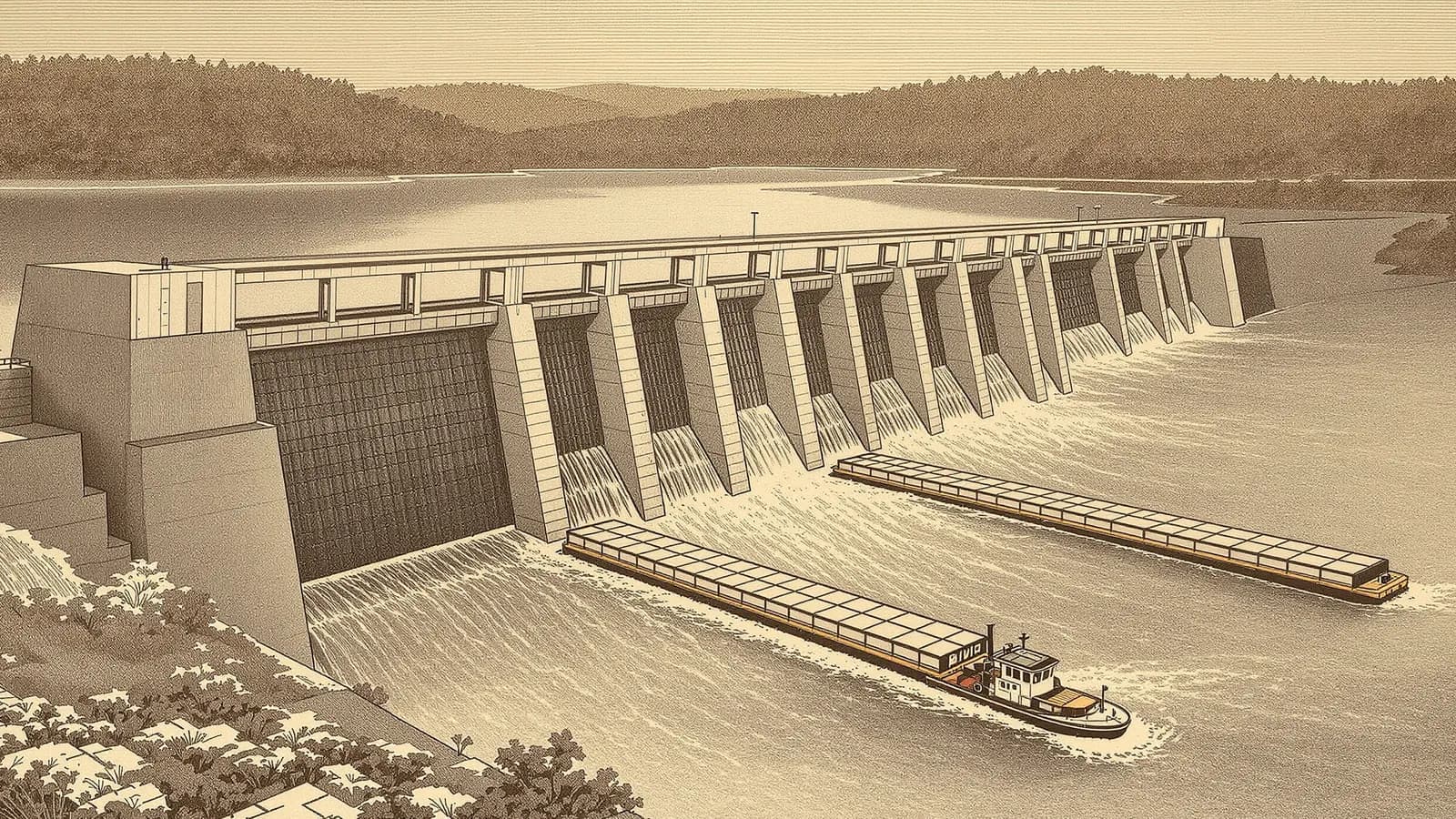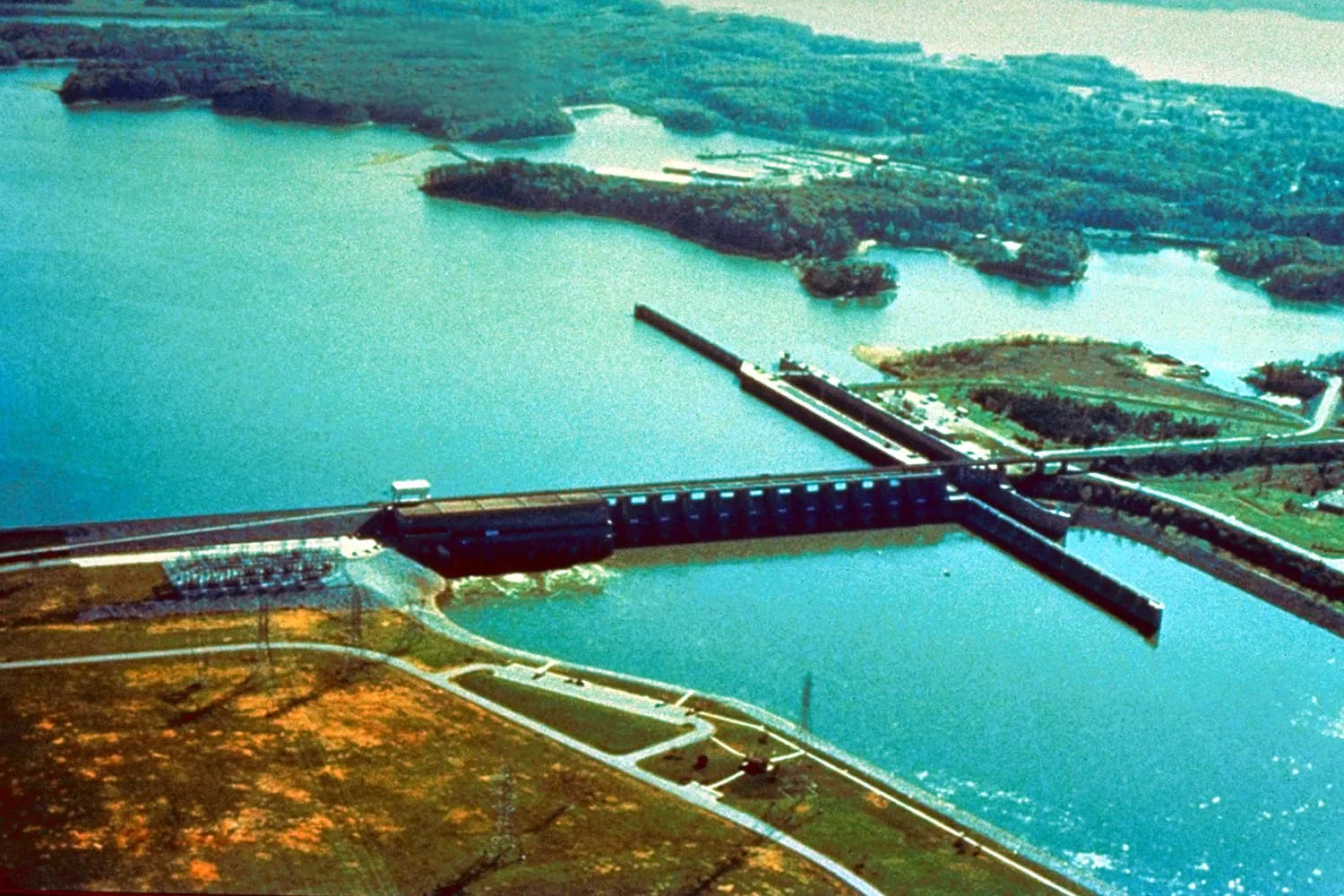
When I started reading up on Cheatham Dam I was sure it was a New Deal dam. It looks like one. Big gray concrete, built by the government, right in the middle of the Depression era river stuff. I'd have bet a beer on it. I'd have lost that beer. The real story is longer than that, and honestly I think it's a better one.
Cheatham came out of the same big push to put rivers to work that kicked off in the 1930s. But it was authorized right after World War II and built in the 1950s. So it's kinda the next chapter of the New Deal story, written by a different crew.
The old locks came first
Before any of the big dams, the Cumberland had fifteen little locks built between 1888 and 1923. A Corps history says Locks A through F handled the river below Nashville. They were 52 feet wide and 280 feet long and lifted boats about ten feet. They were built for steamboats, back when steamboats were the thing.
In the 1930s the Corps capped those old dams with concrete and put metal wickets in below Nashville to get the river up to nine feet deep. That's the actual 1930s federal work on my stretch of water. Problem was, by then the barges had taken over, and every tow had to be broken apart to squeeze through those little locks. That took hours. I get impatient waiting on a drive thru, so I can't imagine.
The New Deal part
Right next door on the Tennessee River, the New Deal went big. Congress created the Tennessee Valley Authority in 1933 under FDR. TVA started Kentucky Dam in July 1938 and finished it in 1944. That's the real New Deal dam in our neck of the woods, and it's a monster.
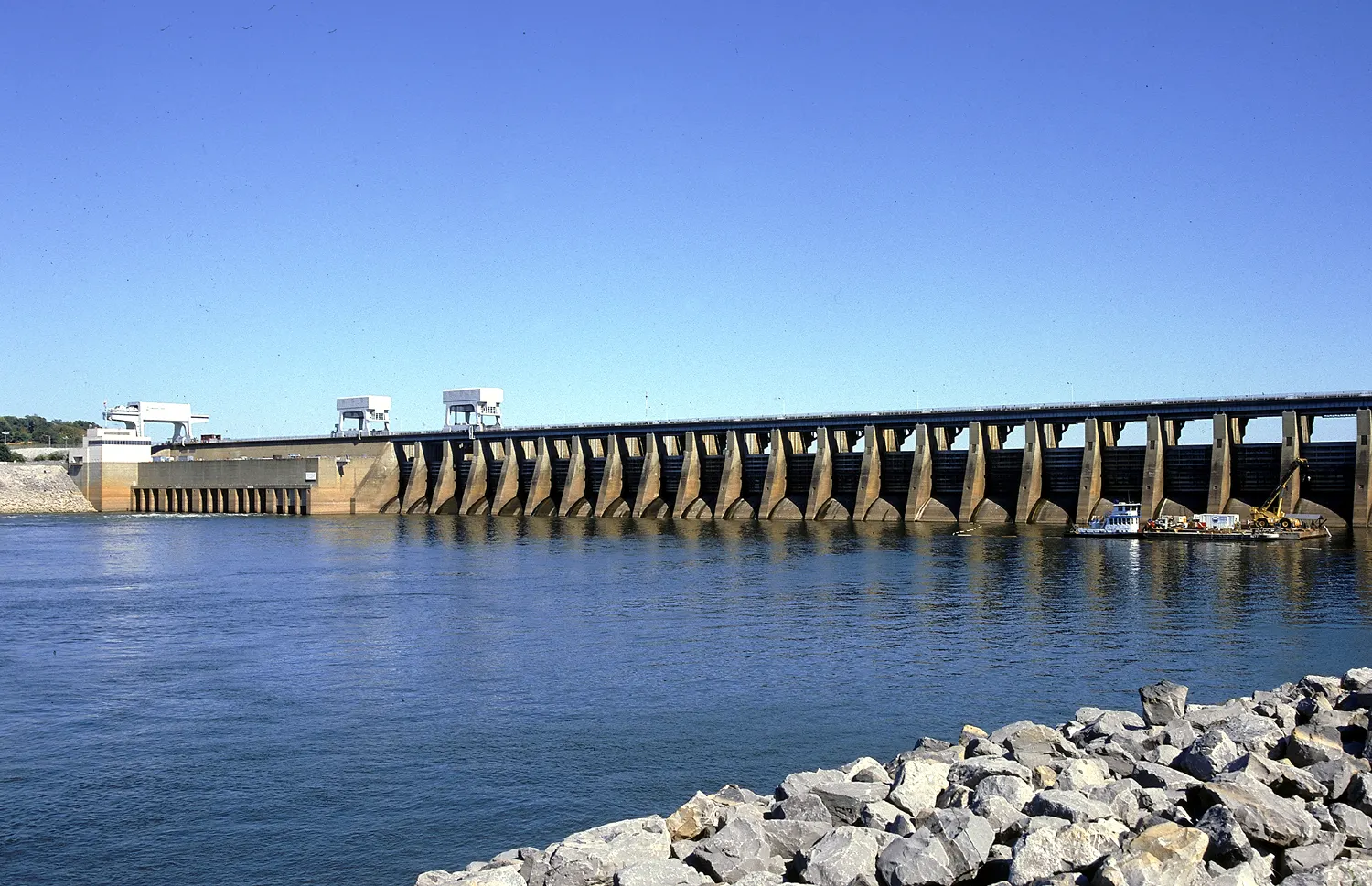
The Cumberland was a different deal though. It belonged to the Corps' Nashville District, not TVA, and the Corps history says the real modernizing of the Cumberland didn't get going until after the war. So while TVA was pouring concrete next door, our river was still running on those old steamboat locks.
Then Cheatham
The Corps says Cheatham Lock was authorized in 1946. That was the Rivers and Harbors Act of 1946, the same law that authorized Old Hickory upstream. Construction started in 1949 and the lock opened in August 1951. The Tennessee Encyclopedia gives 1959 for the project, which I'm pretty sure is the dam and powerhouse wrapping up. Once Cheatham and the dams after it were done, those old A through F locks ended up underwater.
So if somebody at the marina calls Cheatham a New Deal dam, I'm not gonna fight them on it. Same idea, the government taming rivers for barges and power and flood control. It just happened a decade later than they think. I'll probably still tell them though. I can't help it.
The lock today
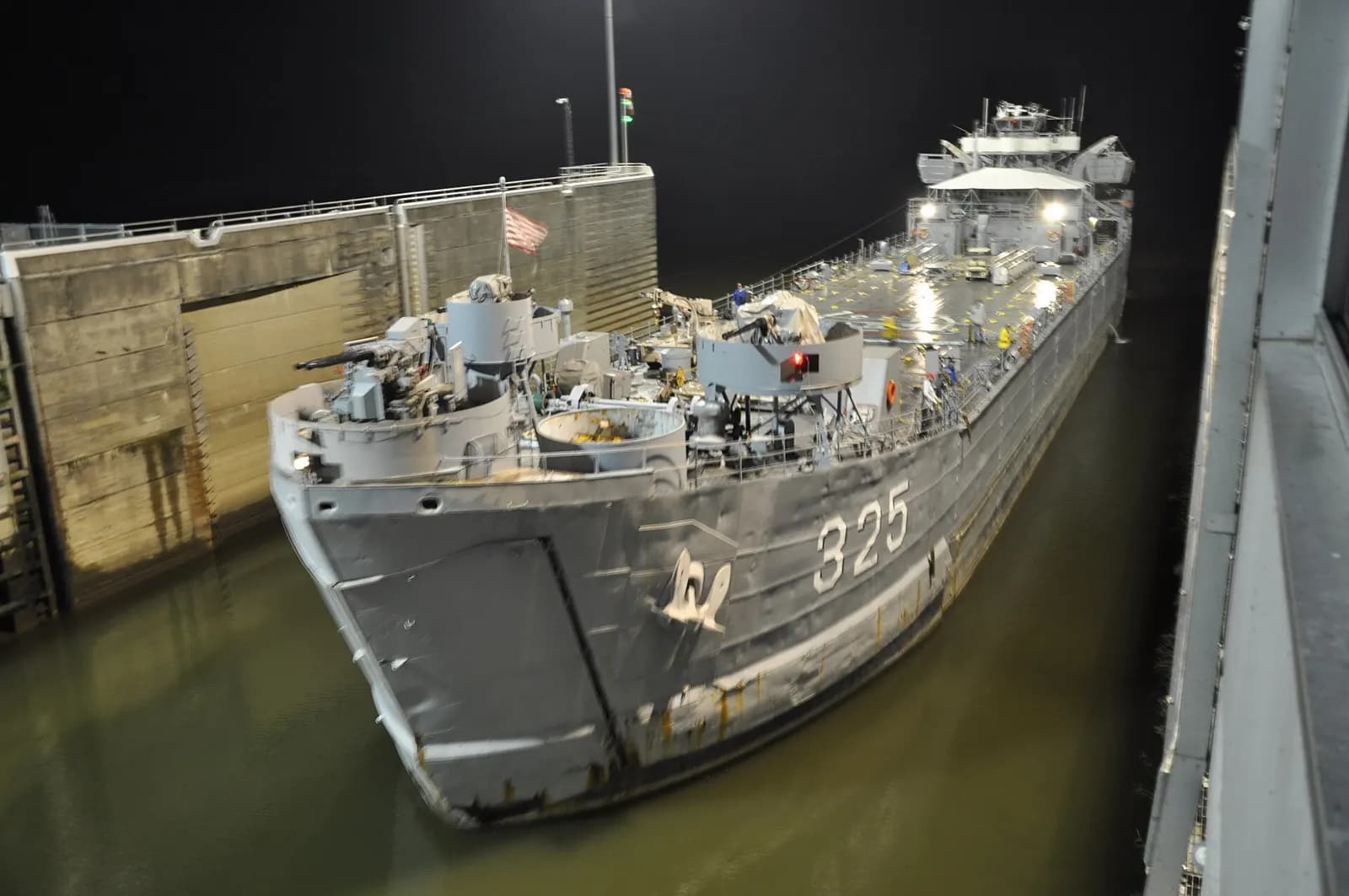
The chamber is 800 feet long and 110 feet wide with a lift of about 26 feet. It sits at river mile 148.6, about 10 miles northwest of Ashland City, and the Corps runs it 24 hours a day. When you're sitting at the bottom of that chamber looking up at the walls it feels a whole lot bigger than 26 feet.
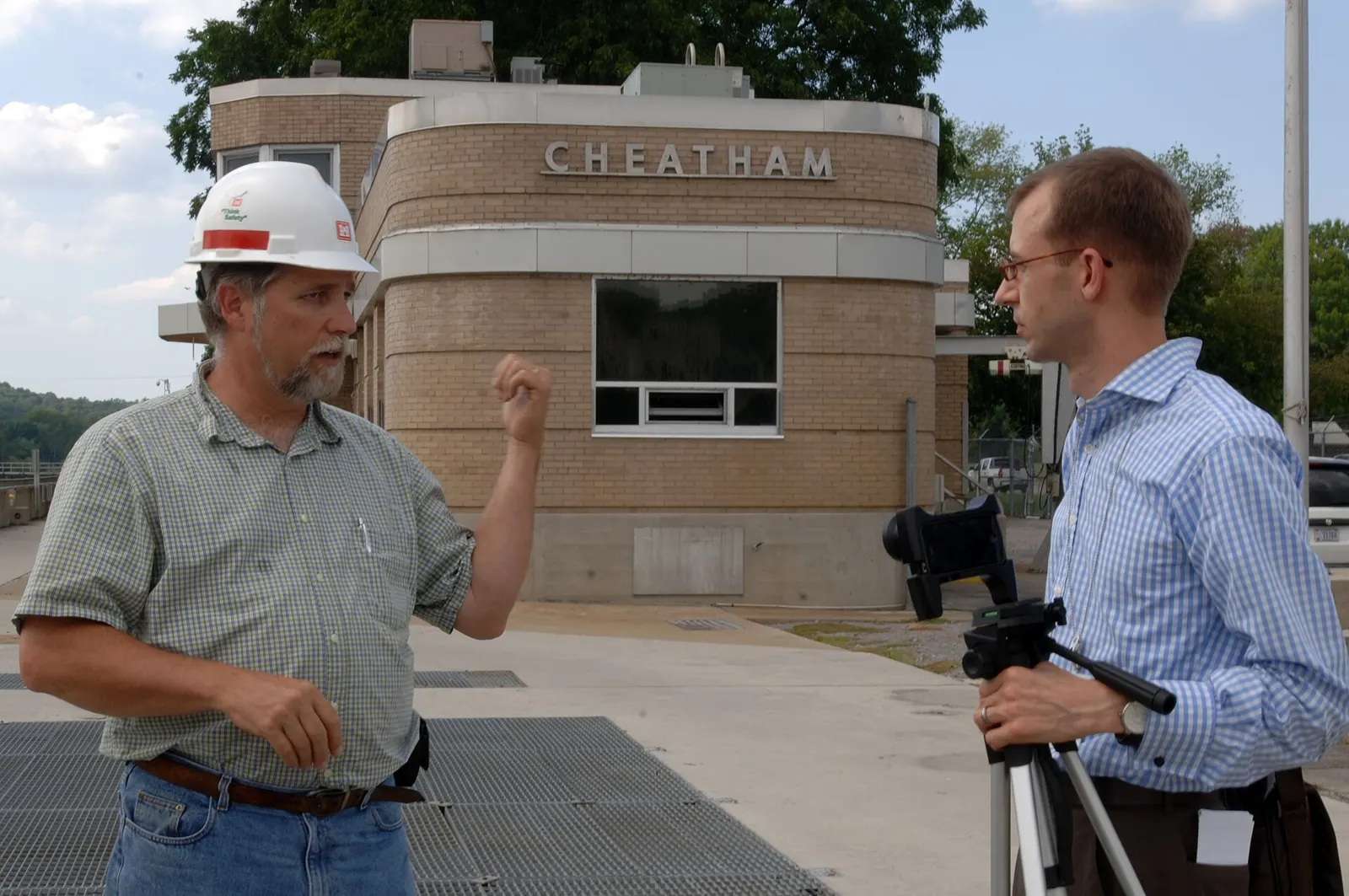
The Corps does close it now and then for repairs, sometimes for weeks. So check the navigation notices before a long trip. Finding out at the gate would be a bummer.
Locking through
Here's the short version. My full write-up is in How to Lock Through on the Cumberland.
- Hang back off the approach and stay away from the dam side.
- Pull the small craft signal cord or call the lock on the radio.
- Wait for a green light or one long horn.
- Idle in, tie off to a floating bit and shut the engine down.
- Keep life jackets on until one short horn tells you to go.
Barges get priority and you might wait a while, so pack water and snacks. Tess will be with me and she's been real clear she does not want to sit in a lock hungry. I've learned to listen on that one. My more detailed boater guide to this lock is Cheatham Lock and Dam.
I'll be going through Cheatham a bunch once Doreen is here, since it's the door between Clarksville and Nashville. Every time I do I'll probably think about those little steamboat locks sitting down there under the water. Kinda cool.
Know any good Cheatham stories? Long waits, weird stuff in the chamber, lock masters with a sense of humor? Send them my way.
Sources
- U.S. Army Corps of Engineers, Cheatham Navigation Lock
- Engineers on the Twin Rivers, 1972 to 1988, Nashville District history
- Tennessee Encyclopedia, Cumberland River
- ASCE, Kentucky Dam
- TVA, Kentucky Dam
- U.S. Army Corps of Engineers, Old Hickory Dam
- Photos via Wikimedia Commons: LST in Cheatham Lock (USACE Nashville District/Fred Tucker, CC BY-SA 2.0), Cheatham Lock (Leon Roberts, USACE, public domain), Kentucky Dam (TVA, public domain).