Boat people talk funny, and my own build sheet is full of boating terms like gunwale tops and deadrise and transom wells and second station that I had to look up at some point. Everybody starts somewhere, so this is a plain glossary for new boaters with examples from my own boat where I can, and if you already know all of these there's plenty of other stuff on the blog.
Which way is which
Stand on the boat facing the front, and port is your left and starboard is your right. The thing that makes them useful is they don't change when you turn around, so port always means the same side of the boat no matter which way you're facing. The memory trick I always heard is that "port" and "left" both have four letters.
The bow is the front and the stern is the back. Forward means toward the bow, aft means toward the stern, and amidships is the middle, so when Raider lists deadrise "amidships" they mean the middle of the hull.
At night the red light is on the port side and the green light is on starboard, with white lights at the stern or up on a mast, and the Coast Guard's rules of the road cover all the details.
Parts of the boat
Hull and transom
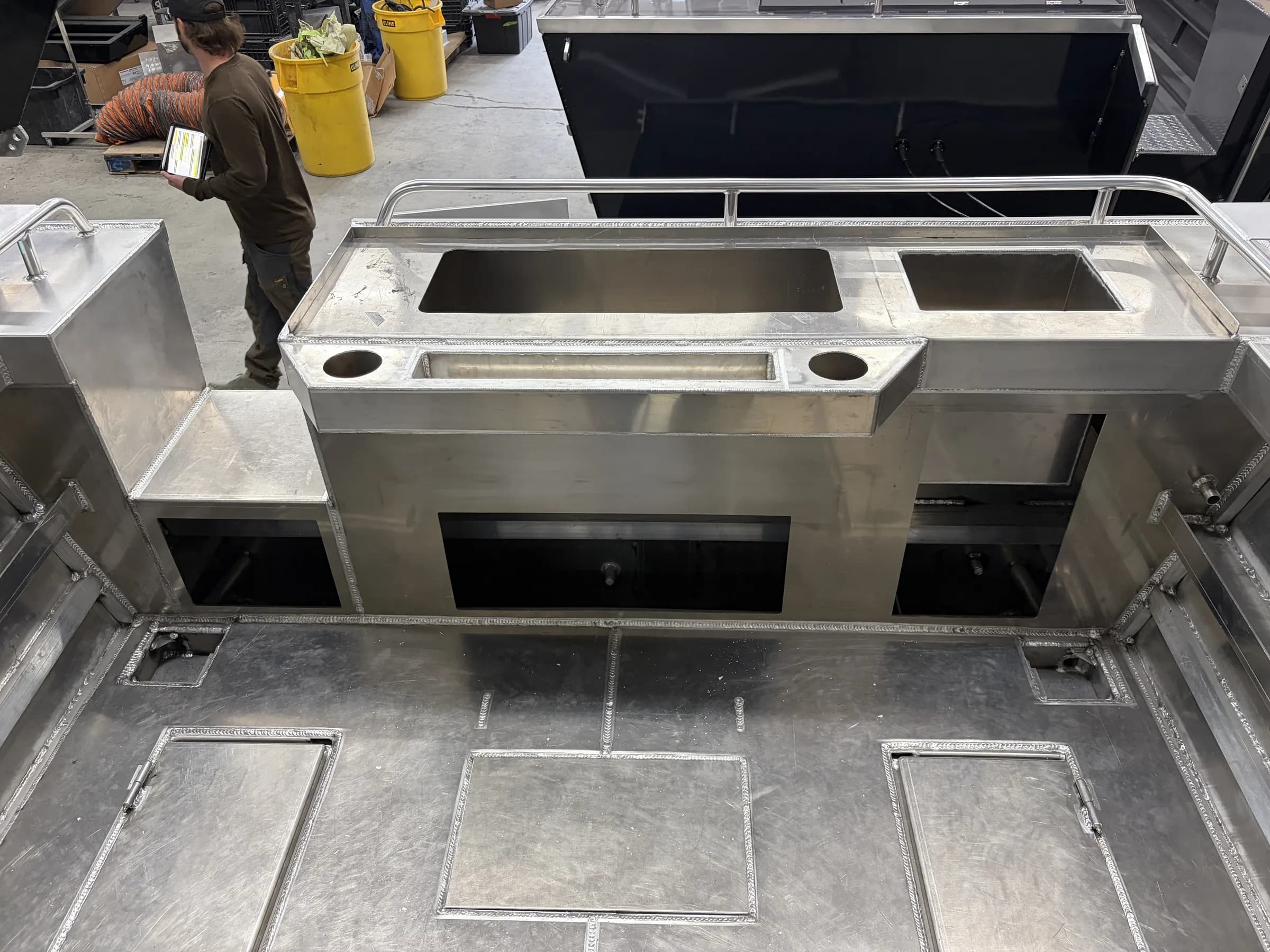
The hull is the body of the boat, and Doreen's is welded aluminum, which you can see sitting in the jig in my gallery. The transom is the flat back wall of the hull where the outboard mounts, and my build sheet has my Honda BF350 on a 30-inch transom setup.
Gunwale
The gunwale is the top edge of the side of the boat, and it's pronounced "gunnel," which yes, is a little ridiculous.
Helm and second station
The helm is where you steer from, with the wheel and throttle and gauges and screens. A second station is just a second place to drive from, and Doreen has one at the cockpit bulkhead with main engine controls, which is handy when you're fishing or docking and want to see the back of the boat.
Cabin, hardtop and cockpit
A cabin is an enclosed space and a hardtop is a solid roof over the helm, and Doreen has both. The cockpit is the open deck where you stand and fish and hang out, and Raider lists a 31-inch cockpit depth for the Coastal 230. A bulkhead is a wall inside the boat, like Doreen's cabin bulkhead that separates the cabin from the cockpit.
Cleats and rub rail
A cleat is the metal fitting you tie lines to, and you'll use them every single time you dock. The rub rail is the strip along the outside of the hull that takes the bumps from docks and pilings.
Livewell and fishbox
A livewell keeps fish alive with circulating water, while a fishbox is an insulated box for keeping fish cold, and Doreen's name is on her fishbox lid.
Measurements
LOA means length overall, the full length of the boat. My contract lists 25'6" LOA while Raider's catalog lists the model's hull length as 23'3", which are just different ways of measuring, and both are on my build page. Beam is the width at the widest point, and Doreen's is 102 inches. Draft is how deep the boat sits in the water, which matters a lot in shallow spots.
Deadrise is the angle of the V in the bottom of the hull, and more deadrise usually means a sharper V. Raider lists the Coastal 230 at 18 degrees at the transom, with 24 amidships and 40 at the bow entry.
Out on the water
Your wake is the waves your boat leaves behind, and "no wake" means slow down enough that you aren't making waves, which you'll see posted near marinas and ramps and locks. A boat is underway when it isn't anchored, tied up or aground, and Tennessee's kids' life jacket rule kicks in when you're underway per the TWRA handbook.
When two boats might run into each other, the rules say one is the give-way vessel that has to change course or speed and the other is the stand-on vessel that holds its course. A boater ed course covers this, and Tennessee may require one anyway, which I went into in Tennessee boating license.
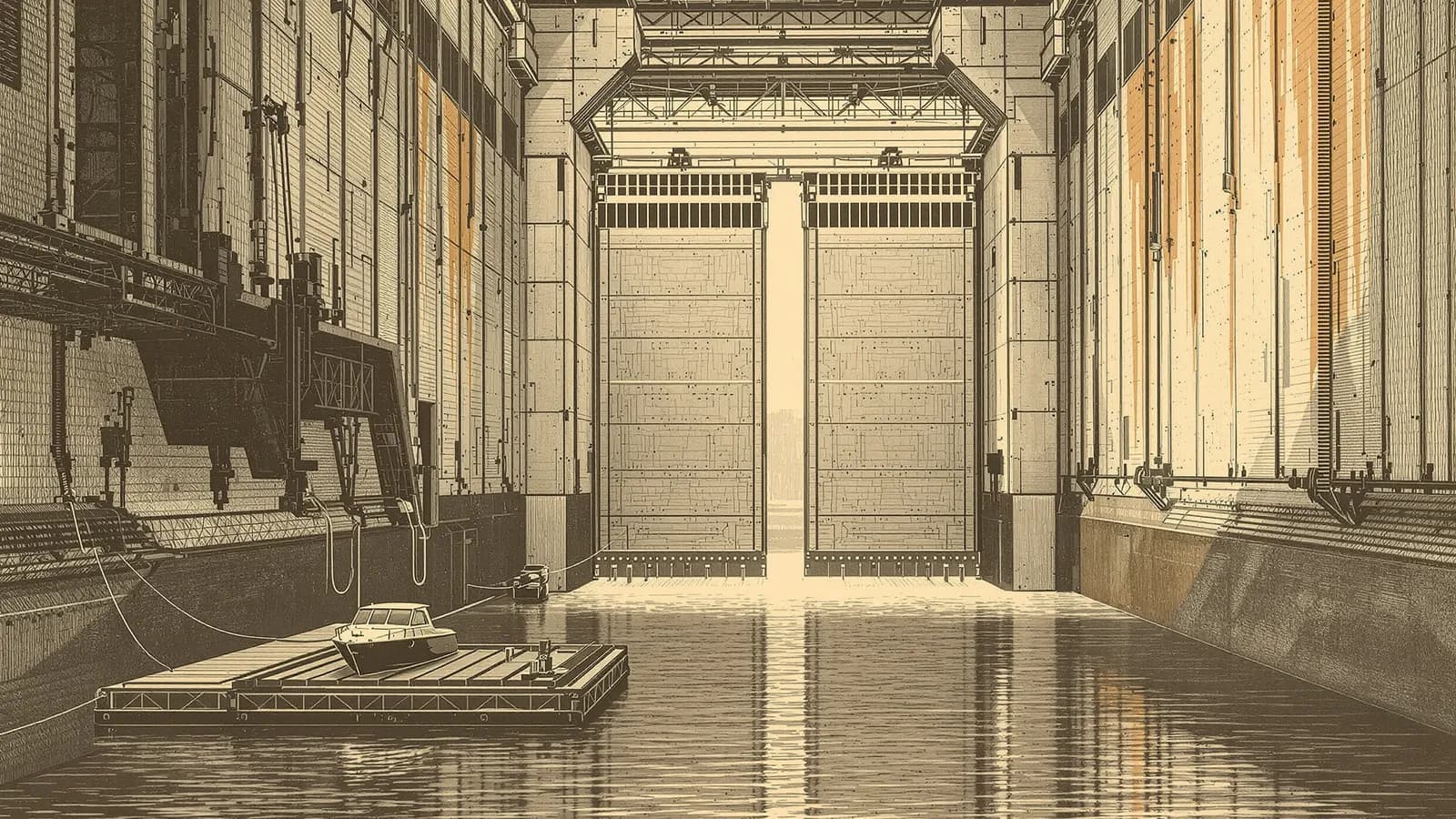
The channel is the marked deeper path boats follow, with buoys and markers showing its edges. A lock is the chamber that lifts or lowers boats past a dam and a lockage is one cycle of it, which is all in my lock-through guide. And on the Cumberland a "tow" usually means a towboat pushing barges, which you stay clear of.
Gear words off my build sheet
A trolling motor is a small electric motor for moving slow and quiet, and Doreen has a Garmin Force Kraken on the bow. Trim tabs are plates on the transom that adjust how the boat sits, and Doreen's Seakeeper Ride system is in that family. A shallow water anchor is a spike that drops straight down to hold you in shallow water, Power-Pole makes them, and they're on Doreen's contract.
Shore power is plugging the boat into electricity at the dock. AIS is a system that shows other boats' positions and identities, and my electronics package has AIS VHF radios. A kicker is a small backup outboard, which I don't have, since the trolling motor and second station handle the slow work.
If you only learn a handful to start, I'd go with port, starboard, bow, stern, cleat, wake, helm, transom, gunwale and channel, and you'll pick up the rest at the ramp. After that how to launch a boat is a good next read.
FAQ
What is port and starboard on a boat?
Facing the bow (front), port is the left side and starboard is the right side. The terms stay the same no matter which way you're facing.
What color light is on the port side of a boat?
Red is on the port side and green is on starboard. The Coast Guard's rules of the road set the details.
What is the gunwale on a boat?
The gunwale, pronounced "gunnel," is the top edge of the boat's side.
What does LOA mean on a boat?
LOA stands for length overall, the full length of the boat.