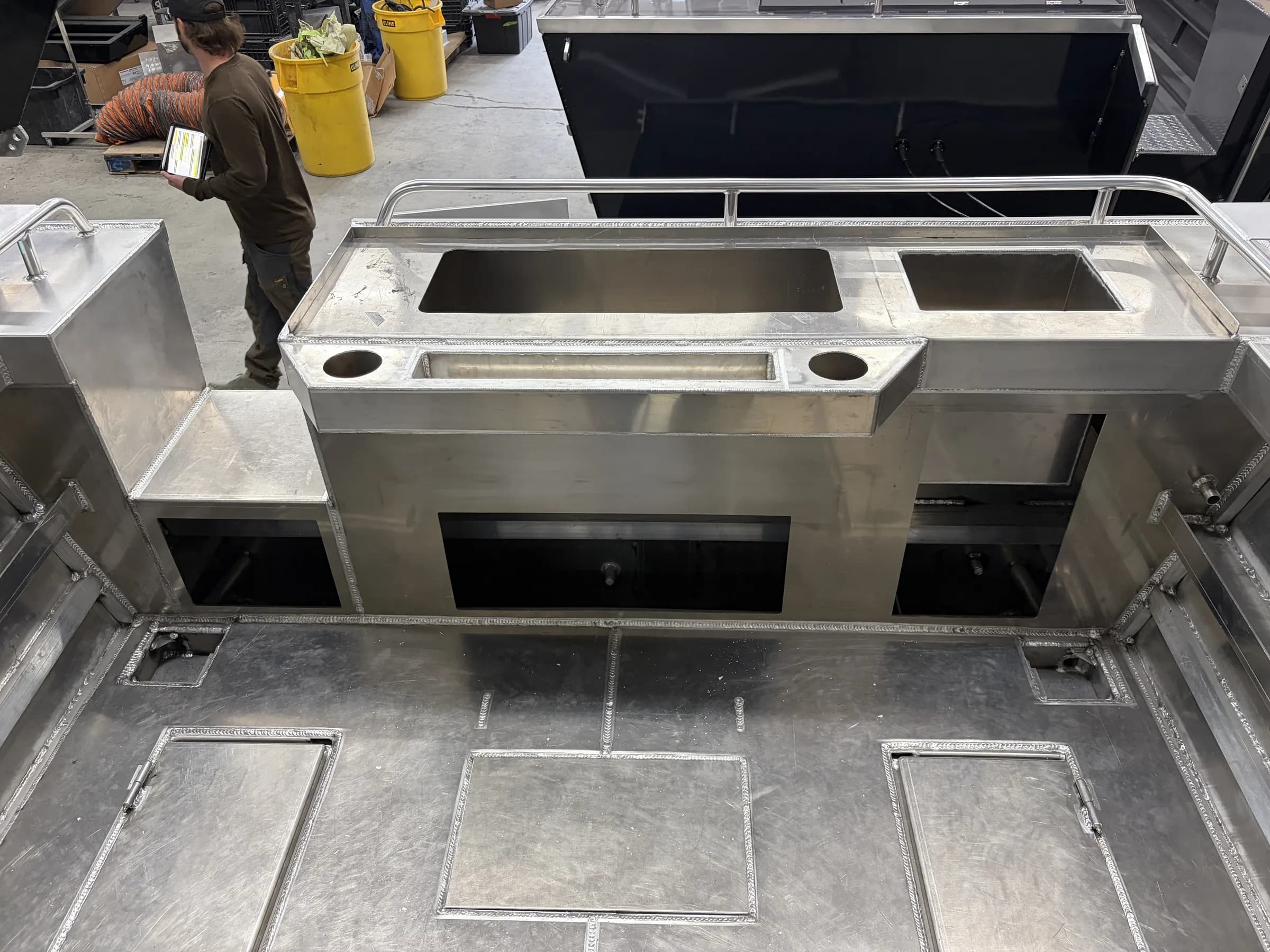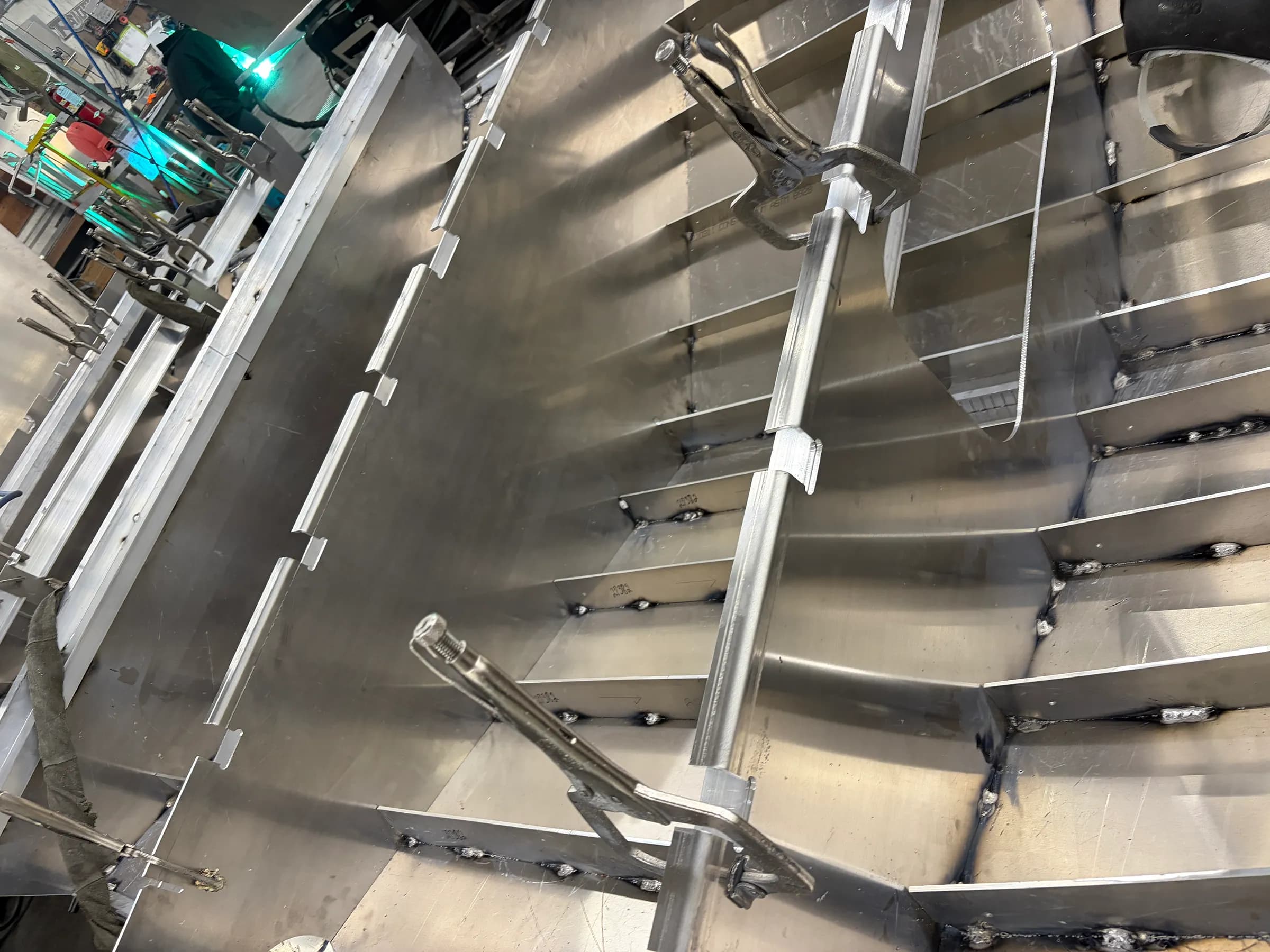
The aluminum vs fiberglass boat question wasn't something I had strong feelings about when I started shopping, and I ended up with a welded aluminum Raider anyway. That photo up top is the inside of my boat on July 20, 2026, just aluminum frames and stringers clamped and tacked in the jig with no gelcoat or mold anywhere, so you can probably guess which way I went. This is the comparison I wish somebody had handed me when I started, with sources, and then how it shook out for me.
Neither one is just better
Discover Boating puts it about like that, each one has trade-offs and it really comes down to how you're going to use the boat. This is their comparison boiled down into a table, since it's easier to look at this way:
| Aluminum | Fiberglass | |
|---|---|---|
| Weight | Usually much lighter for the size | Heavier |
| Price | Production aluminum boats tend to cost less | Tends to cost more |
| Power needed | Smaller engines for similar performance | More power for the same speed |
| Ramp and towing | Easier to launch, load and tow | Heavier on the trailer |
| Maintenance | Less, no gelcoat to wax | Gelcoat upkeep |
| Impact | Dents instead of cracking | Can crack or break |
| Ride in chop | Lighter, more affected by wind | Heavier, smoother and more stable |
| Shapes | Simpler shapes | Complex hulls and molded-in features |
Where aluminum comes out ahead
Going by Discover Boating, a lighter boat means you can run a smaller engine and burn less fuel for the same performance, and it's easier at the ramp and easier to push off a sandbar. Aluminum also dents where fiberglass can crack, and they say people who run rocky rivers pick aluminum for exactly that reason. The Cumberland isn't a boulder field, but there's drift and rocky banks and docks, and after sinking a Sea-Doo on a stump I'll take a dent over a crack any day. There's also no gelcoat to wax, and their example is a busy parent who would rather fish than buff, which I get.
Where fiberglass comes out ahead
Weight helps in chop, and Discover Boating says heavier fiberglass boats generally have better seakeeping and stability and drift slower and more predictably in the wind, which matters if you fish. Fiberglass can also be molded into complicated hull shapes with steps and flare and deadrise that changes along the hull, and they can mold livewells and seats right in. And some people just love that shiny gelcoat, which is fair.
Welded vs riveted aluminum
The basic comparisons kinda skip over this, but aluminum boats aren't all built the same way. A lot of smaller aluminum boats are riveted, which means the plates are held together with rivets, and others are welded with the seams fused. Raider builds welded boats and talks up .250-inch bottoms, heavy side sheets and full chine weld-outs.
I'm not going to claim one lasts longer than the other because I don't have good independent data on it. What I can tell you is what I saw in my own build photos, which was plate fitted on a jig and frames tacked and then the seams welded, and you can see all of it in the gallery.
Big welded boats still weigh plenty
"Aluminum boats are light" is a general rule, but a 23-foot offshore-style welded boat is still a lot of boat. Raider's Coastal Series page lists the Coastal 230 at 4,100 pounds as the catalog weight for the model, with 18 degrees of deadrise at the transom, 24 amidships and 40 at the bow entry. So I think some of the "heavier is smoother" argument starts to blur once you're in big welded aluminum with real deadrise. I'm not an engineer, I just know those numbers weren't drawn up for a farm pond.
How I decided
My actual reasons are the same ones on my Decisions page. I wanted to be out on this river in a boat that could take some chop and still feel like home, I wanted a custom build that matched how the Cumberland actually gets run instead of somebody's used options, I talked myself up from a 21-foot Delta to the Coastal 230, and I had a dealer in Kylo at Selkirk Marine who actually answered me.
I looked at plenty of aluminum boats from different builders plus a whole feed full of others, and the Boats We Looked At page has the list. Every serious contender I had ended up being aluminum and fiberglass never really made the shortlist, though plenty of people love theirs and Discover Boating makes a fair case for it.
Which one I would pick for what
If you're on rivers and ramps and docks and trailering a lot, I'd lean aluminum. If you're on big open bays where ride comfort matters most, fiberglass has a real case. If you want custom options and don't mind waiting on a build, look at the welded aluminum builders, and if you're on a budget Discover Boating says production aluminum tends to cost less. After that I'd go sit in both and ask all the dumb questions you've got.
FAQ
Is aluminum or fiberglass better for a river?
Discover Boating notes that boaters on rocky rivers often choose aluminum, because it dents instead of cracking and is lighter to launch and push off. For smooth open-water rides, fiberglass's extra weight can help.
Are aluminum boats cheaper than fiberglass?
Production aluminum boats tend to cost less than comparable fiberglass boats, according to Discover Boating. Custom welded aluminum boats can cost much more than basic production models.
Do aluminum boats ride rougher than fiberglass?
Lighter boats generally get pushed around more by wind and chop. Hull design, weight and deadrise all matter, so a heavy welded aluminum boat with deep deadrise rides differently than a light jon boat.
What's the difference between welded and riveted aluminum boats?
Riveted boats join aluminum plates with rivets, and welded boats fuse the seams. Builders like Raider build welded hulls.